





Order from our trusted online pharmacy and get cheap prescription drugs without any quality compromise. Buy from us and save your money with prescription drugs.

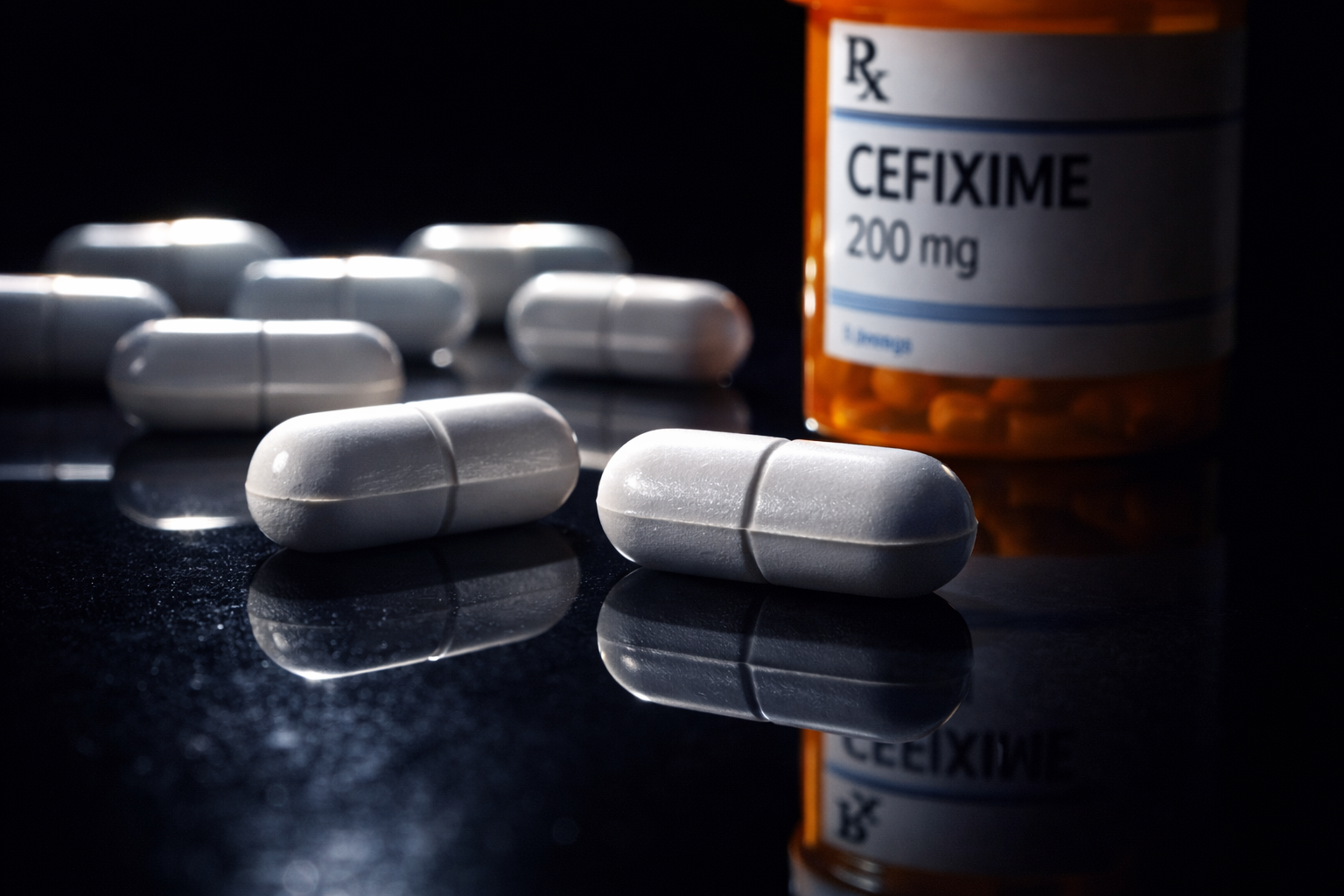
Cefixime is an antibiotic. It is a cephalosporin antibiotic. It is used for bacterial infections. So if the problem is a virus, cefixime will not help.
A lot of people get cefixime for common infections like chest and throat infections, ear infections, and urinary infections. It is also sometimes used for certain sexually transmitted infections, depending on what the doctor is treating and what local resistance looks like.
If you’re looking up cefixime antibiotic uses, it’s usually for things like:
Cefixime works only on bacteria. It does not treat colds. It does not treat flu. It does not treat “viral fever.” That is a common mix-up.
One more thing. People sometimes share antibiotics at home. That is a bad idea. The right antibiotic depends on the right infection. Even the same symptom can have different causes.
If you need help understanding how to take it, medication guidance is available at Grant Pharmacy.

Bacteria have a protective outer wall. That wall keeps them stable. Cefixime interferes with how bacteria build that wall.
So the bacteria become weak. They can’t hold their shape properly. They break down and die. That is the basic idea.
This is why cefixime for bacterial infection can work well when the bacteria are sensitive to it. It also helps your immune system. Because once the bacteria stop growing well, your body has a better chance of clearing the infection fully.
Cefixime does not “make you feel better” directly. It treats the cause (bacteria). Your symptoms improve after the bacteria load drops and inflammation settles. That’s why symptoms can lag behind the first dose.
Also, cefixime is active against several common bacterial strains, but not all. Some bacteria are resistant. That matters a lot. That is one reason doctors sometimes change antibiotics after a few days if things are not improving.
People usually want a straight answer: when will cefixime start working?
Cefixime starts absorbing after you take it. It begins working in the body within a few hours after the first dose. That part is true. It starts reaching the bloodstream and then reaches tissues where bacteria may be.
So yes, it starts doing its job early.
But feeling better is different from “the medicine started working.”
Most people notice early improvement within 24 to 48 hours for many infections. Not always. But often. This is the usual cefixime how fast does it work expectation.
If you’re searching how long does cefixime take to work, the honest answer is: it starts acting within hours, but symptoms often take 1 to 2 days to calm down.
And if you’re searching cefixime antibiotic how long to work, it is the same idea. The drug starts early. The body takes time to settle.
Also, early improvement does not mean the infection is fully cleared. People make that mistake a lot. They feel better on day two and stop. Then it comes back.
The timeline depends on the infection and how sick someone is. But there are some common patterns.
Fever and “overall sick feeling” can improve within 1 to 3 days. Some people feel less tired and less achy by day two. In other people, fever comes down slowly.
Pain and swelling usually take a little longer. A throat infection may hurt less after a couple of days. An ear infection may take several days before the pressure feels better. A skin infection can take a few days before redness starts shrinking.
Some infections take up to 5 to 7 days for noticeable improvement. That does not always mean failure. It can be normal, especially if the infection was more severe at the start.
So when someone asks how long does cefixime take to work for infection, the practical answer is usually:
Also, symptoms can improve but not fully disappear by the time the antibiotic course ends. For example, a cough can linger after the bacteria are controlled. That lingering cough does not always mean you still have infection. Sometimes it’s just irritated airways that need time.
If it’s a UTI, people ask a more specific thing: how quickly does cefixime work for UTI. If cefixime is the right antibiotic for that UTI, burning and urgency often start easing in 1 to 3 days. But if there is fever, flank pain, vomiting, or chills, that can be more serious and needs medical review, because that can be a kidney infection, not a simple bladder infection.
And people sometimes ask how many days does cefixime take to cure infection. That is tricky because “cure” depends on the infection and the prescribed course. Many common infections need several days of treatment, sometimes longer. The course length is part of the cure.

This part gets repeated for a reason.
If you stop early, some bacteria may still be alive. The strongest ones can survive. Then they multiply again. Symptoms return.
Stopping early also pushes antibiotic resistance. That means future infections can be harder to treat.
So even if you feel fine, you still complete what was prescribed. This is part of cefixime treatment duration being important. The duration is not random. It is chosen to clear bacteria fully.
Also, if someone is taking cefixime and symptoms improve quickly, that’s good. But it does not prove the infection is gone. It only shows the bacteria are reduced and inflammation is settling.
If side effects are mild, it is still better to finish the course and talk to a pharmacist or doctor if you need help managing side effects. Don’t just stop on your own unless you are having signs of allergy or serious reaction.
Cefixime can work quickly in one person and slowly in another. Some of that is the infection, some is the person, and some is how it’s taken.
Things that affect speed and results:
The type of infection
A simple throat infection is different from a deep ear infection or a complicated UTI. Some infections are easier to clear.
How severe it is
If someone waited many days before starting treatment, symptoms may take longer to settle.
Your immune system
If your immune system is under stress (poor sleep, other illness, uncontrolled diabetes, steroid use), improvement can be slower.
Dose and timing
This matters a lot. Missing doses leads to low drug levels. Low levels let bacteria keep growing. That changes cefixime effectiveness time in a bad way.
Other health conditions
Kidney function can matter for some antibiotics. Other chronic problems can also slow recovery.
So when people compare stories online (“I felt better in one day”), it doesn’t always apply to you.
Take cefixime exactly the way your provider told you. Don’t guess and don’t change the schedule because you feel better.
Cefixime can usually be taken with or without food. If it upsets your stomach, taking it with food is often easier. But don’t take it with random supplements without checking, because sometimes people mix medicines with antacids or minerals and then wonder why results are slow.
Take doses at the same time each day. This keeps the level steady.
Avoid skipping doses. Skipping is one of the most common reasons antibiotics “don’t work” in real life.
If you’re on a liquid (common for children), measure it with the proper measuring cup or oral syringe. Not kitchen spoons. Kitchen spoons are not accurate.
Your prescription label is the real guide for cefixime dosage for infection. The dose can be different depending on age, weight, kidney health, and what infection is being treated. So the label matters.
Most people tolerate cefixime fine. Some people get mild stomach issues.
Common side effects include:
Usually these are temporary. They often settle as the days pass, or they stop after the medicine is finished.
What should not be ignored:
A mild stomach upset is common. A severe reaction is not.
Sometimes people take the antibiotic correctly and still don’t improve. It happens.
Reasons include:
Resistant bacteria
The bacteria may not be sensitive to cefixime. This is more common now than years ago for some infections.
Wrong diagnosis
If it’s viral, cefixime won’t help. People often think they have a bacterial sinus infection when it is actually viral or allergy-related.
Missed doses
This is common. Even missing one or two doses can slow recovery, especially early in treatment.
Complicated infection
A kidney infection, an abscess, pneumonia, or deeper infections may need different treatment, different antibiotics, or hospital care.
So if you’re on cefixime and things are not improving, it doesn’t always mean the medicine is “bad.” It can mean the situation needs reassessment.
If there is no improvement after 3 to 5 days, that is a good time to contact your provider. Some infections improve slowly, but a complete lack of change needs review.
Also seek help if:
These can be signs the infection is more serious.
If you have questions about what to expect, or if you want to check if your dosing schedule makes sense, you can reach out to grantpharmacy.com for guidance on timing, side effects, and general treatment expectations.
And just to place the keyword clearly because many people search it exactly this way: how long does cefixime take to work for infection depends on the infection, but most people should see some improvement within a few days if it’s the right antibiotic and it’s taken correctly.