






Order from our trusted online pharmacy and get cheap prescription drugs without any quality compromise. Buy from us and save your money with prescription drugs.

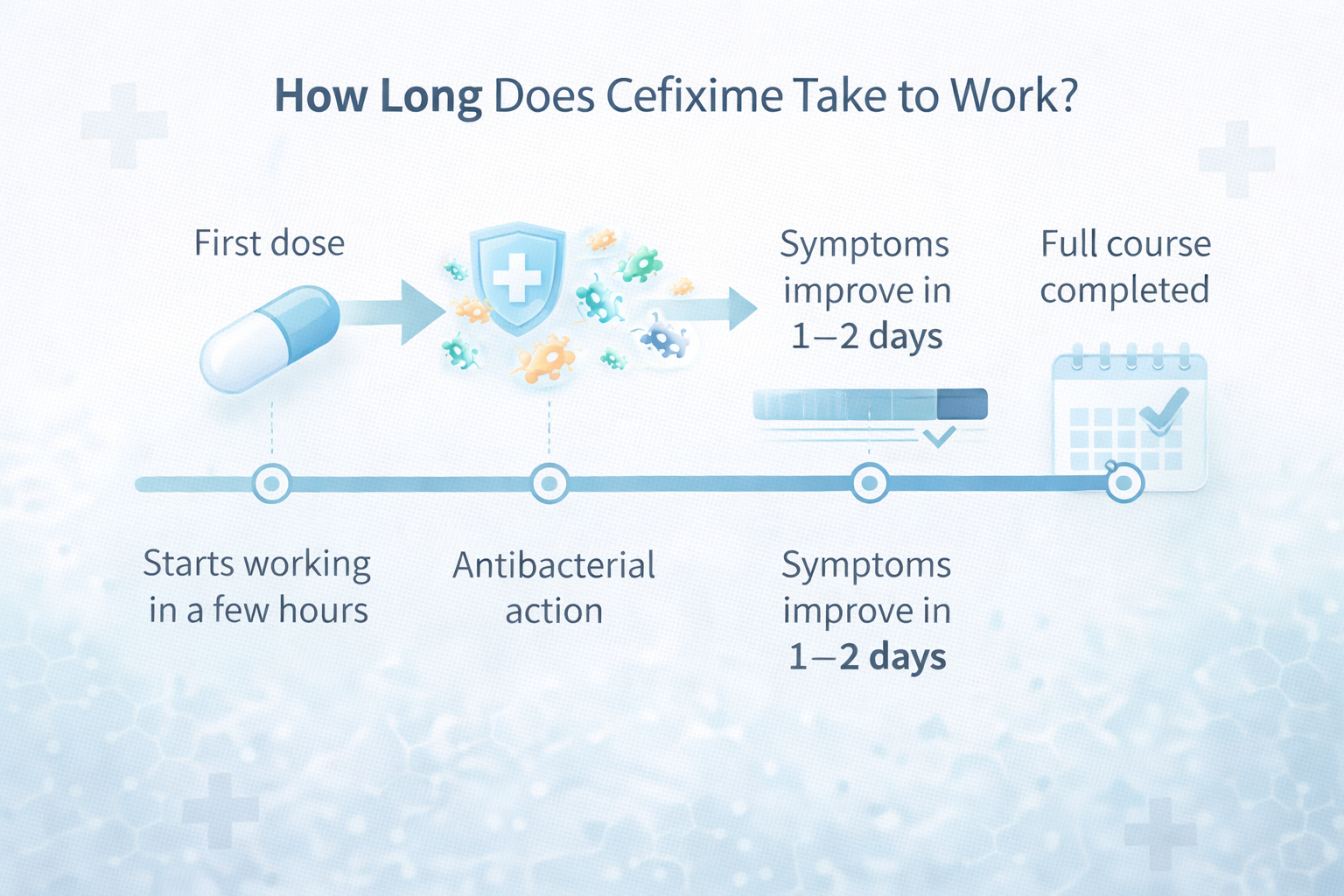
Cefixime usually starts working within a few hours after you take the first dose, but most people don’t really start feeling better until about 48 to 72 hours later. The exact timing can vary depending on the type of infection and how severe it is. Even if symptoms improve early on, it’s still important to complete the full course as prescribed.
This is something people often notice in two stages rather than all at once. First, the medicine begins working quietly in the background. Then, after a day or two, the symptoms begin to ease. That gap can feel a bit frustrating, especially if you were expecting quick relief, but it’s actually a normal part of how antibiotics work.

After you take the first dose, the medication starts acting in your body fairly quickly. That said, you won’t necessarily feel a difference right away.
For common infections — things like urinary tract infections or respiratory infections — most people begin to notice improvement within about 2 to 3 days.
Fever often starts coming down within the first couple of days. Pain or discomfort may also begin to ease around that same time. It’s not always a dramatic change. In many cases, it’s gradual — you just start to notice that things don’t feel quite as intense as they did before.
Some infections, especially if they’ve been present for a while or are more severe, can take longer to show noticeable improvement. So if you don’t feel better immediately, that doesn’t necessarily mean the medication isn’t working.
Cefixime doesn’t work in the same way as something like a pain reliever, where you feel the effect quickly.
Instead, it works by stopping bacteria from growing and multiplying. It doesn’t instantly kill all the bacteria at once.
So what ends up happening is this: the medication slows the infection down, and your immune system continues the job of clearing it from the body.
That process naturally takes time.
If the infection is more severe or more widespread, it may take several days of consistent dosing before you notice clear improvement. This is why the first couple of days can feel slow, even though the treatment is already doing its job.
Most people start noticing small changes before they feel completely better.
You might notice things like:
These improvements don’t always happen all at once. Sometimes one symptom improves before the others. That’s still a good sign that the medication is working as expected.

If there’s no noticeable improvement after about 3 days, it’s a good idea to check in with your doctor.
There are a few possible reasons why this might happen.
In some cases, the bacteria causing the infection may not respond well to cefixime. This is known as antibiotic resistance.
In other situations, the infection might need a different type of treatment or further evaluation.
If symptoms are getting worse instead of better — or not changing at all — it’s better not to wait too long before seeking medical advice.
Not everyone responds to antibiotics at the same pace, and that’s completely normal.
Several factors can influence how quickly cefixime starts working:
For example, a mild infection in someone otherwise healthy may improve more quickly than a more complex infection or one in someone dealing with other health issues.
Even if you start feeling better after a couple of days, the treatment isn’t actually finished at that point.
Stopping antibiotics early is a very common mistake.
It can allow some of the bacteria to survive, which may cause the infection to return. It can also contribute to antibiotic resistance, making future infections harder to treat.
So even if you feel much better, it’s important to continue taking cefixime exactly as prescribed until the course is complete.
A few simple habits can make a noticeable difference in how well the medication works.
It helps to:
Consistency really matters here. Missing doses or taking them at irregular times can reduce how effective the antibiotic is.
If you’re unsure about how to take it properly, pharmacists at Grant Pharmacy can help explain dosing schedules and answer any questions about the medication.
Antibiotics tend to work best when they’re used correctly, and understanding what to expect can make the process feel a lot less stressful.
For trusted information about medications like cefixime and general antibiotic use, patients can explore resources available at grantpharmacy.com, where guidance on safe treatment and proper medication use is available.
Knowing how long cefixime takes to work — and recognizing what kind of progress is normal — can make the whole recovery process feel a bit more predictable and easier to manage.