






Order from our trusted online pharmacy and get cheap prescription drugs without any quality compromise. Buy from us and save your money with prescription drugs.


Clindamycin phosphate gel is usually applied once or twice a day to clean, dry skin, depending on what your doctor has advised. A thin layer should be gently spread over the affected area — most often for acne — while making sure to avoid the eyes, mouth, and any broken or irritated skin. It’s not something that works immediately, so using it consistently every day really matters. Most people begin to notice improvement after a few weeks of regular use.
The first time you use it, the experience becomes confusing for you. People often wonder how much to use, whether to apply it only on spots, or how it fits into their routine. The process becomes simple after you gain familiarity with it.
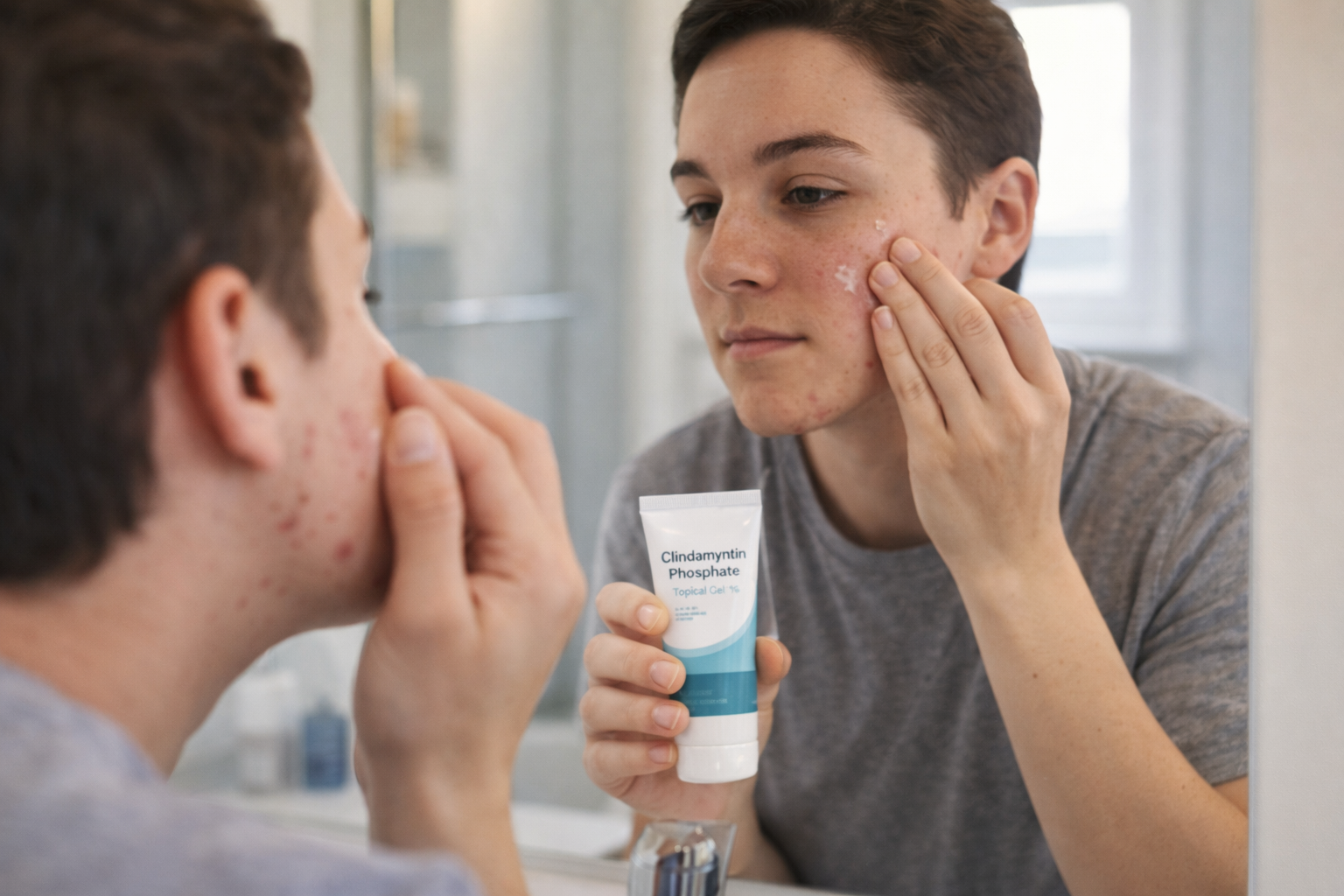
The process begins with you washing your hands. The step appears easy to perform yet it holds vital importance. The affected area requires a gentle face wash before you can use the gel.
You should avoid products which have excessive strength or which remove moisture from your skin. After that, you should use a gentle method to dry your skin by patting instead of rubbing.
Once your skin is dry, take a small amount of the gel and apply a thin layer. This part is important — it shouldn’t be applied thickly like a cream.
Instead of dabbing it only on individual pimples, spread it lightly across the entire affected area. For example, if you have acne across your cheeks, apply it over the whole area rather than just on visible spots.
You should apply the product by rubbing it into your skin until it fully penetrates your skin. The product should not create any substantial weight or sticky residue after application.
The area should remain uncovered after application until your doctor gives permission to use bandages or dressings.
The process requires you to complete your tasks before you can wash your hands a second time.
Most people are instructed to use clindamycin gel once or twice daily.
Some people use it only once, usually in the evening. Others are advised to use it both in the morning and at night. It really depends on the prescription you’ve been given.
If you’re unsure about timing, the most helpful thing is consistency. Try to apply it at the same time every day. That helps the medication work more evenly.
A common question is whether it’s better to use it in the morning or at night. In practice, either can work — what matters most is sticking to the routine your doctor recommended.
Clindamycin gel should only be used on areas where acne is present.
This usually includes:
There are also areas where it should not be applied.
Try to avoid getting the gel near:
If it accidentally gets into any of these areas, it’s best to rinse it off gently with water.

This part takes a bit of patience.
Clindamycin gel doesn’t clear acne immediately. Most people begin to notice improvement within about 2 to 6 weeks.
The skin might show initial worsening signs before showing its first signs of improvement. The situation may lead to discouragement because it occurs in certain individuals.
The key to success requires users to maintain their product usage throughout the day. The results will take longer to develop when users miss their treatments or discontinue them before completing their full schedule.
There are a few common mistakes that can affect how well the treatment works.
Using too much product is one of them. It might seem like more would work faster, but it usually just leads to more irritation.
Applying the gel to dirty or damp skin is another issue. It works best when the skin is clean and fully dry.
Some people also stop using it too soon, especially if they don’t see quick results. Acne treatments require time to work, which means that early treatment discontinuation will hinder treatment success.
People need to avoid combining the product with strong skincare items unless they receive professional guidance. The use of strong scrubs and alcohol-based products will result in skin irritation.
Yes, you can still use other skincare products alongside clindamycin gel — just choose them carefully.
Look for products labeled non-comedogenic, which means they are less likely to clog pores.
If you’re using a moisturizer, apply it after the gel has dried. This helps prevent the medication from being diluted.
The best approach to skincare involves maintaining distance from potent exfoliation methods and products containing alcohol until a physician provides specific instructions to use these treatments.
The proper sequence and timing of acne treatments become essential when multiple treatments are being used. The doctor established specific procedures which need to be followed in those situations.
Most side effects are mild and tend to improve as your skin adjusts.
You might notice:
These effects are usually temporary, especially during the first few weeks.
Still, it’s a good idea to keep an eye on how your skin reacts as you continue using the gel.
There are certain situations where it’s better not to continue without checking with a doctor.
If you experience severe irritation, swelling, or signs of an allergic reaction, it’s best to stop using the gel and seek medical advice.
Clindamycin causes persistent diarrhea as a rare side effect. The situation requires you to consult a doctor when this occurs.
The first situation requires monitoring when complete improvement fails to occur after multiple weeks of correct usage. Your doctor needs to examine your current treatment plan because of this situation.
Using acne treatments properly can make a noticeable difference, especially with prescription medications like this one.
If you’re ever unsure about how to use clindamycin phosphate gel, or how to fit it into your routine, pharmacists at Grant Pharmacy can help explain things clearly and guide you through the process.
For additional information on acne treatments and skincare guidance, patients can explore resources available at grantpharmacy.com, where support for safe and effective use is available.
It may take a little time to get comfortable with the routine, but once you do, it usually becomes much easier to manage and stick with.